
Tai'an Hi-tech Development Zone, Shandong, China
Call Us
+86 155-8858-6611


Views: 125 Author: Site Editor Publish Time: 2026-01-06 Origin: Site


The global demand for boom lift for sale has grown steadily over the past decade, driven primarily by large-scale construction, infrastructure development, and energy-related projects. In industry practice, the term “boom lift” most commonly refers to telescopic boom lifts, which serve as the baseline configuration for height and outreach performance within the aerial lift category.
While articulating boom lifts play an important role in specific access scenarios, telescopic boom lifts remain the reference point for evaluating working height, horizontal reach, and outdoor jobsite capability. As safety regulations and productivity requirements continue to evolve, understanding this hierarchy is essential when assessing a boom lift for sale in the global market.
A boom lift is a type of aerial lift designed to raise personnel and tools to elevated work positions using a hydraulic or electric boom mechanism. Its defining feature is the ability to extend both upward and outward, enabling access to hard-to-reach locations.
A telescopic boom lift uses a straight, extendable arm to maximize vertical height and horizontal outreach. These machines are primarily used in infrastructure, bridge construction, energy facilities, and large outdoor job sites. Telescopic boom lifts set the performance benchmarks for the industry.
An articulating boom lift features multiple hinged sections that allow the boom to bend around obstacles. Articulating models are selected for applications where straight booms cannot operate effectively, such as indoor maintenance, industrial plants, and densely built urban environments. They complement telescopic lifts rather than replace them.
When evaluating a boom lift for sale, most buyers begin by reviewing telescopic boom lift specifications, as these define the upper limits of working height, outreach, and outdoor performance.
Important factors include:
l Working Height and Outreach: Ensure the lift matches site requirements. Overspecification increases cost, underspecification limits utility.
l Load Capacity: Must accommodate personnel, tools, and materials safely.
l Power Source: Options include electric, diesel, and hybrid. Electric models suit indoor and low-emission areas; diesel is preferred for rough terrain.
l Terrain Capability: Rough-terrain models offer superior mobility for outdoor sites, while indoor lifts prioritize compactness.
l Compliance Standards: Verify CE, ANSI, or ISO compliance to meet local regulations.
Other considerations include ease of transport, maintenance intervals, and long-term lifecycle cost.
The global boom lift market combines established manufacturers with emerging international suppliers. Historically, North American and European brands have set performance standards, particularly in the rental sector. Asian manufacturers increasingly offer cost-competitive alternatives that meet international compliance standards.
Suppliers typically focus on one or more segments:
l Rental fleets, emphasizing durability and standardized components
l Owner-operated equipment for industrial or infrastructure projects
l Compact or specialized models for indoor or limited-access scenarios
Understanding the landscape helps buyers match supplier strengths with project needs.
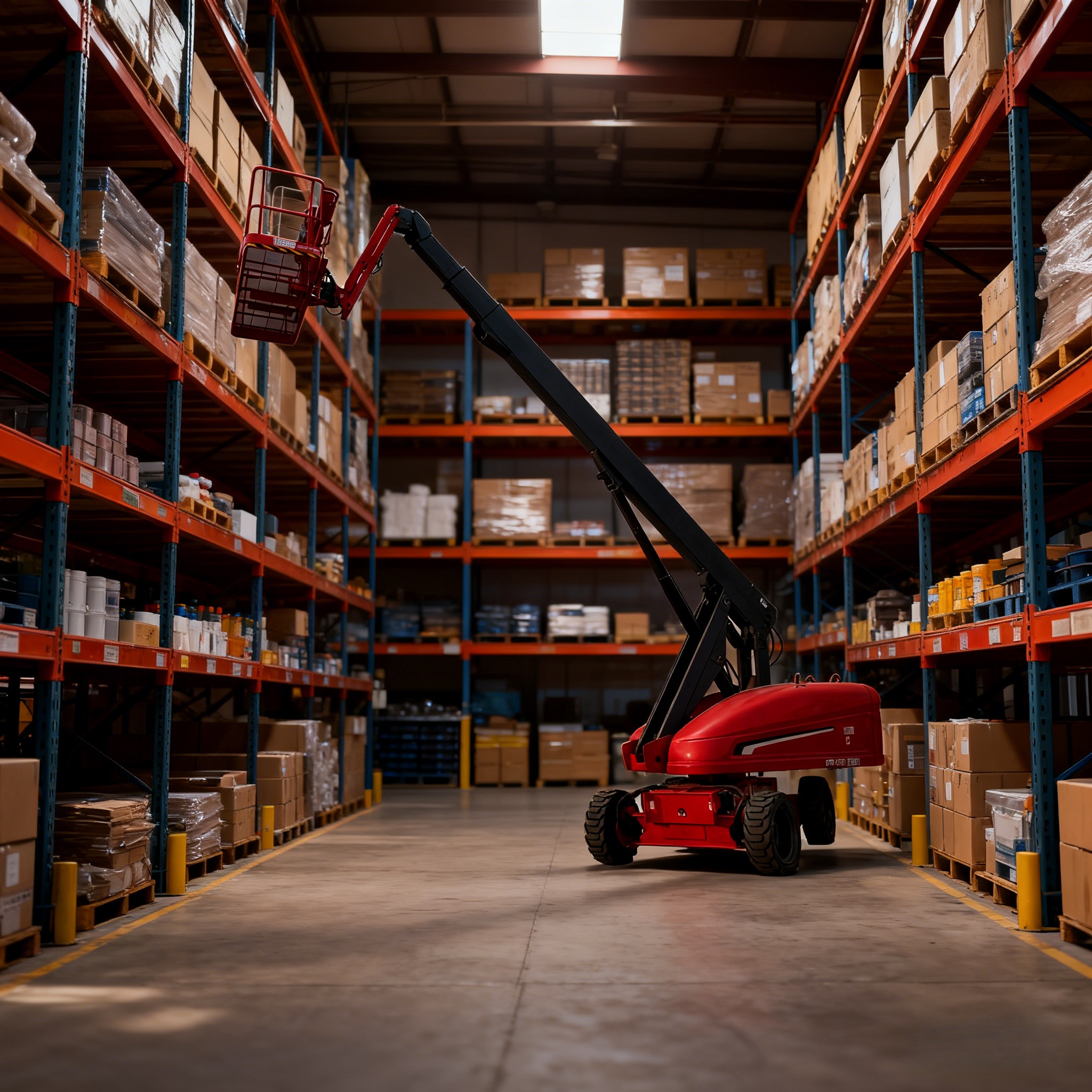
The following brands are widely recognized in the global market for boom lift for sale. They are listed alphabetically to maintain neutrality, and their product offerings typically include both telescopic boom lifts (the industry benchmark) and articulating boom lifts (used for access-restricted environments). This overview highlights typical applications, strengths, and positioning without ranking or promoting any brand.
Genie offers a broad portfolio of telescopic and articulating boom lifts, widely deployed in construction, industrial maintenance, and rental fleets worldwide. Their telescopic lifts are often used for high-reaching outdoor projects such as bridges and infrastructure, while articulating models handle maintenance tasks in tight indoor or urban spaces. Genie’s global service network and parts availability make it a reference point for buyers evaluating reliability and uptime.
Haulotte, a European manufacturer, emphasizes compact design and safety features. Their telescopic lifts are engineered for medium to high reach outdoor projects, whereas articulating lifts provide flexible solutions for industrial and urban maintenance. Haulotte products are commonly chosen when maneuverability and adherence to European safety standards are important.
JLG has long been associated with heavy-duty telescopic boom lifts capable of extreme height and long outreach, making them suitable for infrastructure, energy, and large-scale construction projects. Their articulating lifts complement these capabilities, particularly in indoor or obstructed environments where direct reach is not possible. JLG’s fleet durability and service footprint have made it a reference in global procurement decisions.
Manitou integrates boom lifts with broader material handling solutions, offering telescopic lifts that excel in construction and outdoor industrial environments. Articulating lifts are designed for tight indoor or warehouse applications. Manitou machines are valued for versatility, allowing operators to handle mixed-use projects efficiently.
Niftylift specializes in compact and towable boom lifts, making them suitable for light-duty construction, maintenance, and rental scenarios. While telescopic lifts provide sufficient height for outdoor projects, articulating lifts are particularly effective in confined spaces, such as indoor facilities or narrow urban job sites. Niftylift emphasizes portability and ease of setup.
Skyjack focuses on user-friendly, easy-to-maintain lifts. Their telescopic boom lifts are used for medium-height outdoor tasks, while articulating lifts serve industrial maintenance. The simplicity of design and maintenance predictability make Skyjack machines attractive to rental operators managing large fleets.
Snorkel provides value-oriented boom lifts with an emphasis on practicality and reliability. Telescopic lifts cater to standard construction and infrastructure applications, while articulating models are preferred for indoor or restricted-access work. Snorkel’s approach focuses on cost-effective solutions without compromising safety standards.
TERLION is an emerging global player offering both telescopic and articulating boom lifts designed to meet international standards. Their telescopic lifts are benchmarked for infrastructure, energy, and outdoor projects, while articulating lifts target confined or complex workspaces. TERLION’s growing presence in overseas markets positions it as a viable option among international suppliers without emphasizing brand dominance.
XCMG produces heavy-duty telescopic boom lifts suitable for infrastructure, civil engineering, and energy projects. Articulating models are also offered for industrial and urban maintenance applications. XCMG combines large manufacturing capacity with a competitive cost structure, making its lifts accessible for diverse global markets.
Zoomlion provides a comprehensive range of aerial lifts, including telescopic lifts for high-reaching construction and energy projects, and articulating lifts for indoor and constrained environments. Their wide product range, strong manufacturing capabilities, and expanding international distribution networks make them a prominent participant in the global boom lift market.
Across these ten brands, telescopic boom lifts generally serve as the primary benchmark for height, outreach, and heavy-duty outdoor projects, while articulating boom lifts act as a supplementary solution for access-limited, indoor, or complex work areas. Buyers evaluating boom lift for sale should consider not only brand but also specific model performance, terrain suitability, and compliance with international safety standards.

In purchasing scenarios, telescopic boom lifts establish performance benchmarks, while articulating boom lifts are evaluated as task-specific alternatives. Differences between suppliers often relate to:
l Maximum working height and outreach
l Indoor vs outdoor optimization
l Electric vs diesel/hybrid availability
l Rental fleet suitability vs ownership lifecycle cost
Parameter | Telescopic Boom Lift | Articulating Boom Lift | Towable Boom Lift |
Typical Working Height | 20–60 m | 12–45 m | 10–20 m |
Horizontal Outreach | Long (up to 24 m) | Medium (with up-and-over reach) | Limited |
Platform Capacity | 230–450 kg | 200–350 kg | 200–230 kg |
Power Options | Diesel / Hybrid | Electric / Diesel / Hybrid | Electric / Diesel |
Terrain Capability | Rough terrain / outdoor-focused | Indoor & outdoor | Flat, prepared ground |
Mobility & Transport | Self-propelled | Self-propelled | Trailer-mounted |
Typical Applications | Infrastructure, bridges, energy | Maintenance, industrial sites | Light maintenance, rental |
Compliance Standards | CE / ANSI / ISO | CE / ANSI / ISO | CE / ANSI / ISO |
Ownership vs Rental | Ownership & long-term projects | Mixed use | Rental-focused |
Cost Range (Relative) | High | Medium to high | Low to medium |
Usage Note: Telescopic lifts set the baseline for height and outreach. Articulating lifts complement these capabilities in constrained environments.
Selecting between purchasing and renting a boom lift for sale depends on several key factors, including usage frequency, project duration, budget, and the specific requirements of the worksite. Understanding these considerations helps buyers optimize cost, operational efficiency, and safety compliance.
Purchasing a boom lift is typically most advantageous for organizations with regular or long-term projects. For instance, construction companies managing multiple ongoing infrastructure sites, energy firms maintaining industrial facilities, or municipalities performing consistent maintenance tasks often benefit from owning their equipment.
l Telescopic boom lifts are preferred when maximum height and outreach are frequently required, such as for bridges, high-rise facades, or wind turbine maintenance.
l Articulating boom lifts complement telescopic models in facilities or sites with obstructions, indoor access constraints, or complex layouts.
l Total lifecycle cost analysis, including maintenance, operator training, and spare parts availability, is critical.
l Ownership allows customization of equipment specifications to match recurring operational needs.
Renting is generally more suitable for short-term, specialized, or one-off projects, where buying a high-capacity lift would not be cost-effective. Contractors executing a single building project, temporary industrial maintenance, or urban events requiring limited aerial access often rely on rental fleets.
l Access to a variety of models, including telescopic and articulating lifts, without long-term capital investment.
l High mobility: rental lifts are often towable or compact, allowing easy relocation between sites.
l Maintenance and compliance are typically managed by the rental provider, reducing operational burden.
l Flexibility to select equipment with features tailored to project-specific conditions, such as indoor electric lifts or rough-terrain diesel telescopic lifts.
l Large-scale construction or infrastructure projects: Ownership of telescopic lifts ensures consistent availability and full operational range.
l Industrial or indoor maintenance projects: Articulating lifts are often rented to navigate tight or obstructed spaces.
l Short-term or occasional projects: Towable boom lifts or small telescopic models rented from local providers may be the most economical solution.
Ultimately, the decision to buy or rent a boom lift should be based on matching equipment capabilities to real-world project requirements, rather than simply considering cost. Integrating both telescopic and articulating boom lifts within a fleet, whether owned or rented, allows organizations to address a wide range of operational scenarios efficiently.
Purchasing a boom lift for sale involves a significant investment, and making the wrong choice can lead to operational inefficiencies, increased downtime, and higher lifecycle costs. The following are some common mistakes buyers should avoid:
Many buyers are tempted to select the lowest-cost lift without considering long-term factors. While a budget-friendly telescopic or articulating boom lift may appear economical, hidden costs—such as frequent maintenance, limited durability, or shorter service life—can outweigh initial savings. Evaluating total lifecycle cost, including operator training, parts availability, and energy consumption, is essential for sustainable investment.
Boom lifts require regular inspection, preventive maintenance, and occasional repairs to remain safe and reliable. Selecting a model without verifying the availability of service centers, spare parts, or technical support in your region is a common oversight. For telescopic boom lifts deployed in remote outdoor sites, timely maintenance ensures uninterrupted operation. For articulating lifts used indoors or in constrained environments, specialized parts may be necessary to maintain accessibility performance.
Selecting the wrong type of boom lift—telescopic versus articulating—can severely limit project efficiency.
l Telescopic boom lifts are ideal for high-reaching tasks with long horizontal outreach, such as bridges, high-rise construction, or energy infrastructure.
l Articulating boom lifts excel in indoor or obstructed spaces, navigating over obstacles or tight layouts.
Failing to align the boom type with site requirements often results in repeated adjustments, delays, or even the need to rent alternative lifts.
Different lifts perform differently on uneven or rough terrain. A telescopic boom lift designed for outdoor rough terrain may be unsuitable for indoor or paved areas, while an indoor-optimized articulating lift may struggle on muddy or rugged job sites. Proper assessment of terrain and mobility requirements is crucial to avoid downtime and safety hazards.
Boom lifts must comply with relevant international standards (CE, ANSI, ISO) and local safety regulations. Neglecting to verify compliance can expose operators to legal risks and workplace hazards. Buyers should also ensure the lift includes proper fall protection, platform controls, and emergency safety systems.
Telescopic lifts are typically larger and heavier, requiring adequate transport and storage solutions. Articulating lifts, though more compact, still need secure transport and positioning space. Ignoring these logistics can lead to operational inefficiencies or additional costs.
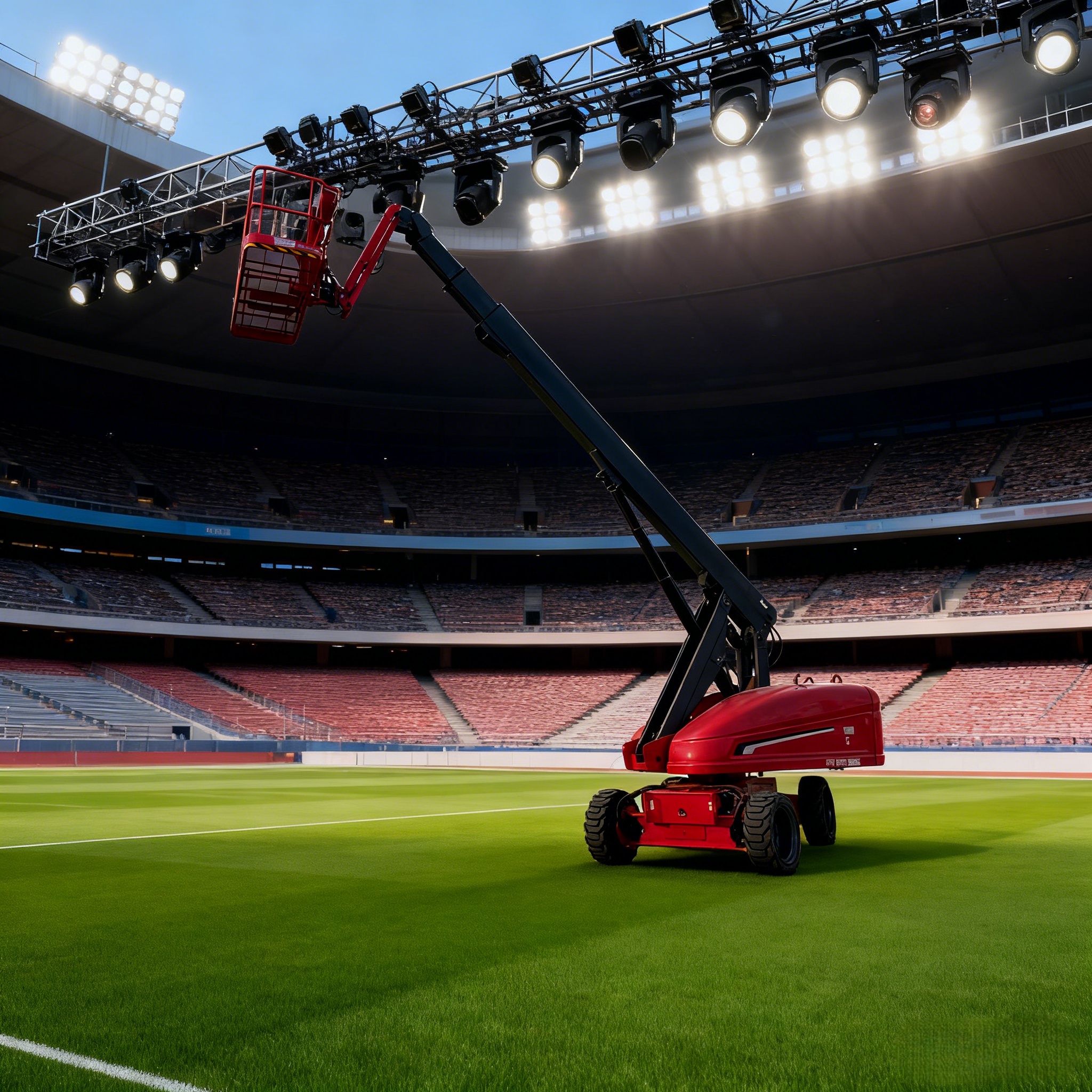
In the global market for boom lift for sale, telescopic boom lifts remain the industry benchmark, setting the standard for maximum working height, horizontal outreach, and outdoor performance. Articulating boom lifts continue to serve as complementary solutions, particularly in indoor, obstructed, or access-restricted environments.
Successful procurement depends on carefully matching lift selection to project requirements, operational frequency, terrain conditions, and compliance with international safety standards (CE, ANSI, ISO). Evaluating both telescopic and articulating options ensures that organizations can address a wide range of job site scenarios efficiently while minimizing downtime and long-term costs.
For buyers and project planners seeking further guidance or information about boom lift for sale, you can reach out directly via email: avicii@work.terlion.com. Expert consultation can help identify the right lift type, specifications, and operational strategies to align with specific project needs.


