
Tai'an Hi-tech Development Zone, Shandong, China
Call Us
+86 155-8858-6611


Views: 146 Author: Site Editor Publish Time: 2026-01-12 Origin: Site


Urban construction, commercial property management, and industrial facility maintenance are increasingly influenced by stricter regulations on noise, emissions, and site accessibility. As cities grow denser and indoor work environments become more complex, traditional diesel-powered aerial work platforms often face operational restrictions or limitations.
Electric articulating boom lifts have emerged as a preferred solution in such environments. Their electric drive systems reduce operational noise and eliminate local emissions, while the articulated (knuckle) boom design allows operators to reach over obstacles and accurately position platforms in confined spaces. These characteristics make them particularly suitable for indoor facilities, shopping centers, airports, hospitals, and urban construction sites.
Shandong TERLION Heavy Industry Technology Co., Ltd. (TERLION) is among the global manufacturers contributing to the development of electric articulating boom lifts. This guide provides a neutral comparison of seven internationally recognized manufacturers, including TERLION, highlighting different design philosophies, performance priorities, and application focuses. Manufacturers are listed in no particular order, and the purpose is to inform buyers rather than endorse specific products.
Electric articulating boom lifts typically cover working heights ranging from approximately 10 meters to over 20 meters, depending on model design and intended application. While higher working height is often a primary selection factor, horizontal outreach is equally important in real-world operations.
Indoor and urban environments frequently involve obstacles such as machinery, shelving, structural beams, or façade elements. Articulated booms provide the ability to reach up and over these obstacles, but increased outreach often comes with trade-offs in chassis size and weight. Buyers should evaluate whether compact dimensions or extended reach are more critical for their specific applications.
Noise control is a central reason for selecting electric boom lifts. Electric motors operate more quietly than internal combustion engines, making them suitable for noise-sensitive environments such as commercial buildings, public facilities, and nighttime urban work.
In addition to the drive system, wheel design also plays a role. Solid, non-marking, and quiet wheels help minimize rolling noise and protect finished indoor floors. When evaluating machines for indoor use, buyers should consider overall operating sound levels, not just the absence of an engine.
Most electric articulating boom lifts are powered by either lead-acid or lithium-ion battery systems. Lead-acid batteries remain common due to lower upfront cost, while lithium-ion systems are gaining adoption because of faster charging, longer service life, and improved energy efficiency.
Runtime expectations depend on duty cycles, lift movements, and driving distance. Buyers should assess whether a machine can complete a full working shift on a single charge or if opportunity charging will be required. Power system selection has a direct impact on long-term operating cost and fleet availability.
Compactness is often critical for electric articulated boom lifts used indoors or in dense urban areas. Narrow chassis width, tight turning radius, and reduced tail swing enable machines to navigate doorways, aisles, and congested job sites.
Design choices that prioritize maneuverability may limit maximum outreach or platform capacity. Buyers should balance compact design requirements with the operational demands of their projects.
Modern electric articulating boom lifts are designed to meet international safety standards. In North America, ANSI standards apply, while European markets require CE marking and compliance with EN280.
Common safety features include load sensing systems, emergency lowering functions, tilt alarms, and controlled operating envelopes. Buyers operating across multiple regions should ensure machines meet applicable regulatory requirements and site safety policies.
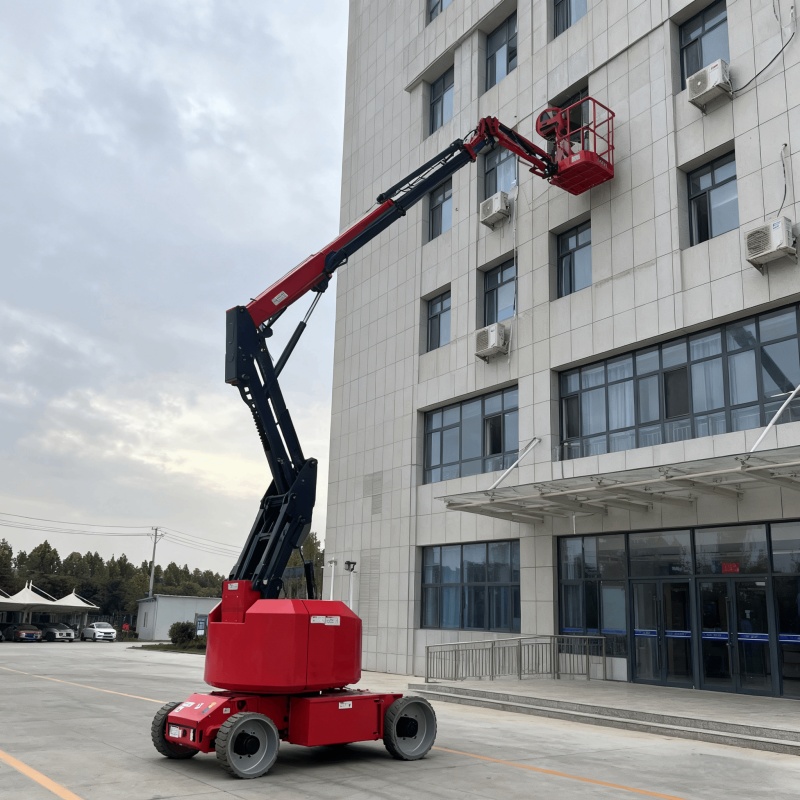
JLG Industries is one of the largest and most established manufacturers of aerial work platforms globally. Its electric articulated boom lift portfolio reflects decades of experience serving rental companies, contractors, and industrial users.
Key features and focus areas:
Platform stability and precise proportional control for smooth operation
Broad range of working heights and outreach options
Advanced safety systems including load-sensing and emergency lowering
Integration with telematics for fleet management and maintenance tracking
Typical applications:
Commercial building maintenance, warehouses, airports, and industrial plants
Large-scale infrastructure projects requiring high reliability and operator familiarity
JLG’s combination of reliability, operator-friendly controls, and widespread service network makes it a frequent choice in North America and global rental markets.
Genie, a Terex brand, is globally recognized for its articulated boom lift designs, particularly the Z-Series. Genie’s electric articulated boom lifts feature compact chassis layouts and smooth proportional control systems, supporting precise positioning even in confined spaces.
Key features and focus areas:
Lightweight yet rigid construction for improved maneuverability
Advanced battery management systems for extended operational runtime
Optional platform rotation and telescopic extensions for complex indoor tasks
Strong emphasis on ergonomics and operator comfort
Typical applications:
Indoor facilities, hospitals, shopping centers, and urban construction projects
Rental fleets seeking widely supported and operator-friendly machines
Genie’s extensive global rental adoption ensures operator familiarity, which is advantageous for fleets and contractors needing consistent, reliable performance.
Haulotte is a major European manufacturer with a strong focus on compliance, safety, and modular design. Its electric articulated boom lifts are built according to EN280 and other European safety regulations, reflecting the region’s high standards.
Key features and focus areas:
Modular platform and chassis design for easier maintenance and long service life
High energy efficiency and low-noise operation for indoor and urban sites
Advanced stability and tilt-sensing systems
CE and ISO certification ensuring international compliance
Typical applications:
Public infrastructure, stadiums, airports, and industrial facilities
Projects in Europe and regions requiring strict safety and environmental compliance
Haulotte balances durability, operational safety, and energy efficiency, making it suitable for contractors and facility operators with long-term fleet planning needs.
Niftylift specializes in lightweight and energy-efficient designs, particularly for indoor and urban use. Its electric articulated boom lifts emphasize compactness without compromising reach or load capacity.
Key features and focus areas:
Lithium-ion and lead-acid battery options for extended runtime
Low-noise design suitable for noise-sensitive indoor environments
High maneuverability with narrow chassis and minimal tail swing
Emphasis on operator safety and intuitive controls
Typical applications:
Indoor maintenance, atrium access, and urban construction sites
European rental fleets and facility maintenance projects
Niftylift’s innovative lightweight design and low-noise performance make it a top choice for confined spaces and urban settings where efficiency and environmental impact are critical.
Dingli has rapidly expanded internationally, offering a comprehensive range of electric articulated boom lifts covering multiple working heights and configurations. Its products aim to balance performance, compliance, and cost efficiency.
Key features and focus areas:
ANSI and CE standards compliance for global usability
Modular electrical and hydraulic systems for simplified maintenance
Compact and lightweight design suitable for indoor and urban environments
Energy-efficient electric drive systems with low operational noise
Typical applications:
Commercial and industrial facilities, international rental fleets
Indoor and outdoor construction projects requiring flexible access
Dingli’s combination of affordability, compliance, and global availability makes it a competitive choice for operators seeking balanced performance and value.
Skyjack emphasizes simplicity, reliability, and ease of operation. Its electric articulated boom lifts are designed to be rugged yet user-friendly, with straightforward controls and accessible maintenance points.
Key features and focus areas:
Durable chassis and robust structural design
Simplified electronic controls for operator ease
High uptime and reliability for rental or multi-shift operations
Battery options optimized for indoor and mixed-use environments
Typical applications:
General maintenance, warehouses, industrial facilities, and rental fleets
Projects that prioritize reliability and low total cost of ownership
Skyjack’s focus on operational simplicity and service accessibility makes it especially suitable for contractors and rental operators who need consistent, dependable performance.
TERLION is a Chinese manufacturer contributing to the global electric articulated boom lift market with a focus on versatility, safety, and cost efficiency. Its product line covers multiple working heights and configurations designed for indoor and outdoor applications.
Key features and focus areas:
Electric drive systems with low noise for indoor environments
Compact chassis and maneuverable design for confined spaces
Compliance with ANSI and CE standards to support international markets
Emphasis on ease of maintenance and modular components
Typical applications:
Industrial facilities, urban construction sites, commercial building maintenance
Projects requiring electric-powered, low-noise, and environmentally friendly access solutions
TERLION’s range demonstrates the growing capability of Chinese manufacturers to meet international performance and compliance expectations while addressing the practical needs of modern operators.
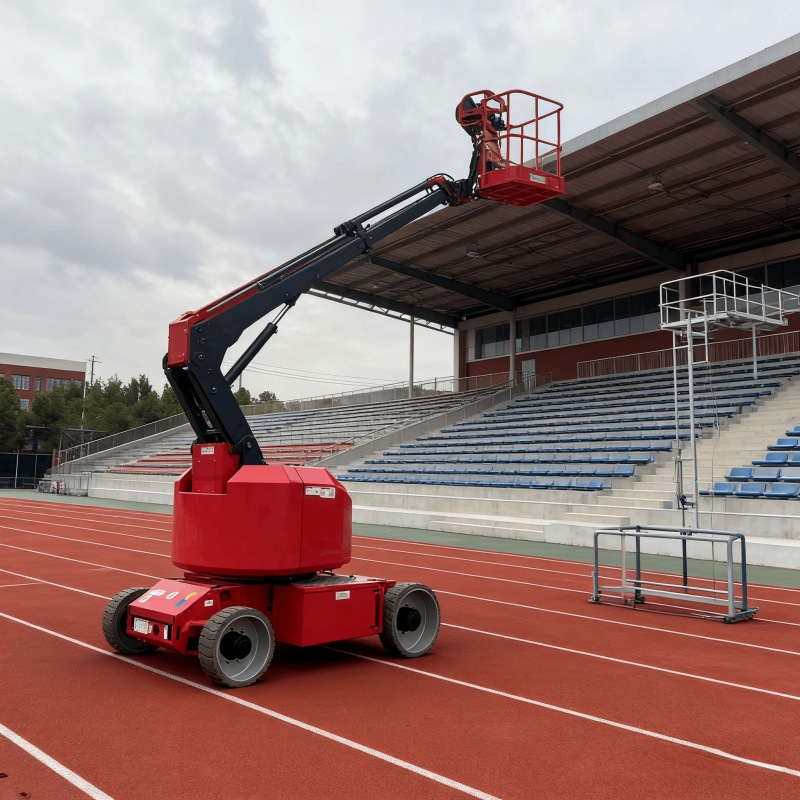
Electric articulating boom lifts serve a wide range of applications, and understanding the operational environment is critical to selecting the right machine. Differences between models are often less about brand and more about how design choices address specific worksite challenges.
Application-specific considerations:
Indoor maintenance and commercial facilities: Machines must operate quietly, fit through narrow aisles and doorways, and minimize floor marking. Compact chassis, precise proportional controls, and non-marking wheels are essential for safe and efficient indoor operation.
Urban construction and infrastructure projects: Outreach capability, maneuverability around obstacles, and compliance with noise and emissions regulations dominate. Articulated boom design allows access over barriers while maintaining platform stability.
Industrial and heavy-duty sites: Durability, load capacity, and ease of maintenance are priorities. Machines that can sustain multi-shift operations with minimal downtime provide significant operational advantage.
Technical and performance differences to evaluate:
Power systems: Lithium-ion batteries are increasingly preferred for faster charging, longer lifespan, and reduced maintenance, whereas traditional lead-acid systems may be more cost-effective upfront.
Control systems: Advanced proportional controls improve precision, safety, and operator confidence, particularly in confined spaces or at full extension.
Chassis and wheel design: Compact frames, low tail swing, and quiet, non-marking wheels enhance indoor and urban usability.
Stability and load management: Tilt sensors, load monitoring, and automatic leveling systems vary across machines, affecting operational safety and platform performance.
By focusing on the combination of application environment and technical priorities, buyers can identify machines that match operational needs without overemphasizing brand. This approach ensures higher efficiency, safer operation, and optimal return on investment across the life cycle of the equipment.
Selecting an electric articulating boom lift should be guided primarily by operational requirements, environmental constraints, and long-term efficiency, rather than brand recognition alone. Buyers can evaluate machines based on a combination of application-specific factors and technical characteristics:
Indoor, noise-sensitive environments: Prioritize low-noise operation, compact chassis, and non-marking wheels to navigate tight spaces while minimizing disturbance. Smooth proportional controls enhance precision and safety.
High-utilization rental fleets: Durability, ease of maintenance, and standardized control interfaces are critical for maximizing uptime and reducing operational costs across multiple shifts.
Regulation-intensive projects: Ensure machines comply with relevant regional standards, such as EN280 in Europe or ANSI requirements in North America, and verify local service and parts availability.
Mixed-use or variable-reach operations: Balance working height, horizontal outreach, and maneuverability to cover diverse tasks efficiently without over-specifying capacity.
By clearly defining the primary use case and operational constraints before evaluating models, buyers can streamline the selection process, avoid unnecessary overspecification, and ensure that the chosen lift provides optimal safety, efficiency, and value over its service life.
Beyond battery and control system improvements, the electric articulated boom lift market is shaped by technological advancement, regulatory pressure, and evolving operational demands:
Battery technology: Lithium-ion systems are increasingly adopted due to faster charging, longer lifespan, and reduced maintenance compared with traditional lead-acid batteries.
Environmental compliance: Stricter regulations on noise and emissions continue to accelerate the transition from diesel-powered platforms to electric solutions, particularly in indoor and urban environments.
Operational cost optimization: Manufacturers are developing energy-efficient drive systems, regenerative braking, and intelligent battery management to reduce lifecycle costs and improve energy efficiency.
Automation and telematics: Remote monitoring, predictive maintenance, and data-driven diagnostics help operators maximize uptime and reduce unplanned downtime, particularly for rental fleets or multi-shift operations.
Modular and multifunctional design: Modular platforms and optional attachments allow a single machine to adapt to multiple applications, enhancing flexibility and return on investment.
Sustainability and green construction: Low-emission electric drives, noise reduction, and energy-efficient systems align with global trends in environmentally conscious urban development.
These trends suggest that future machines will be more versatile, efficient, and environmentally responsible, meeting increasingly complex operational requirements across industrial, commercial, and urban projects.
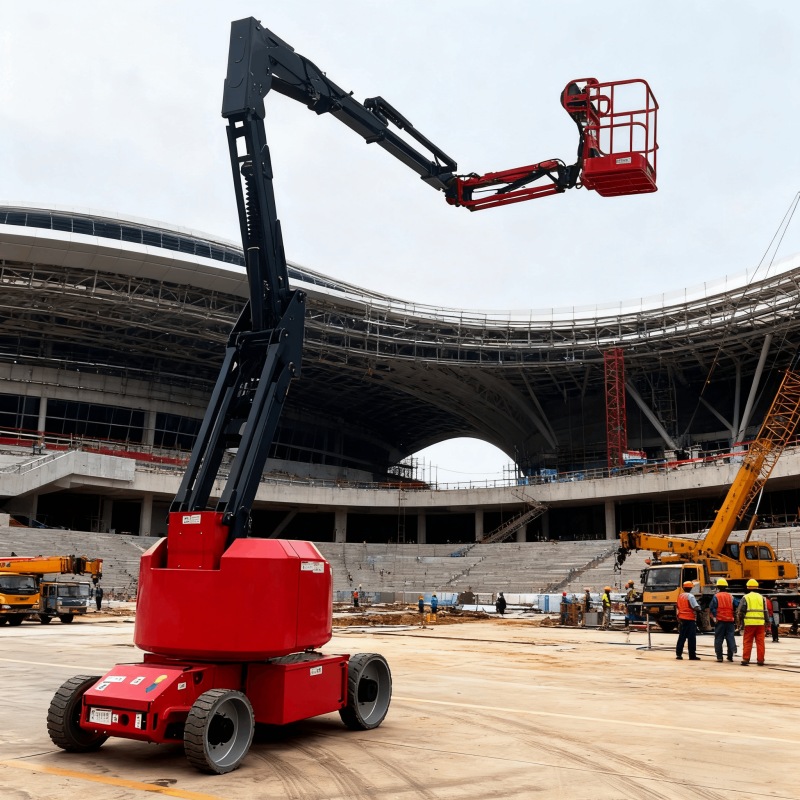
There is no single electric articulated boom lift manufacturer that is universally superior for all applications. Each supplier represents a distinct combination of design philosophy, performance focus, and target market.
Buyers should adopt a structured decision-making process: define the operational environment first, prioritize technical and safety features, evaluate service and maintenance requirements, and then consider brand support and regional availability.
Selecting an improperly specified machine can result in inefficiencies, higher maintenance costs, or delays, while a well-matched lift ensures optimal outreach, maneuverability, and operator safety. Investing in versatile, energy-efficient, and low-maintenance machines supports long-term productivity and cost-effectiveness, providing measurable value over the equipment’s service life.
For further inquiries or professional guidance, contact: avicii@work.terlion.com


